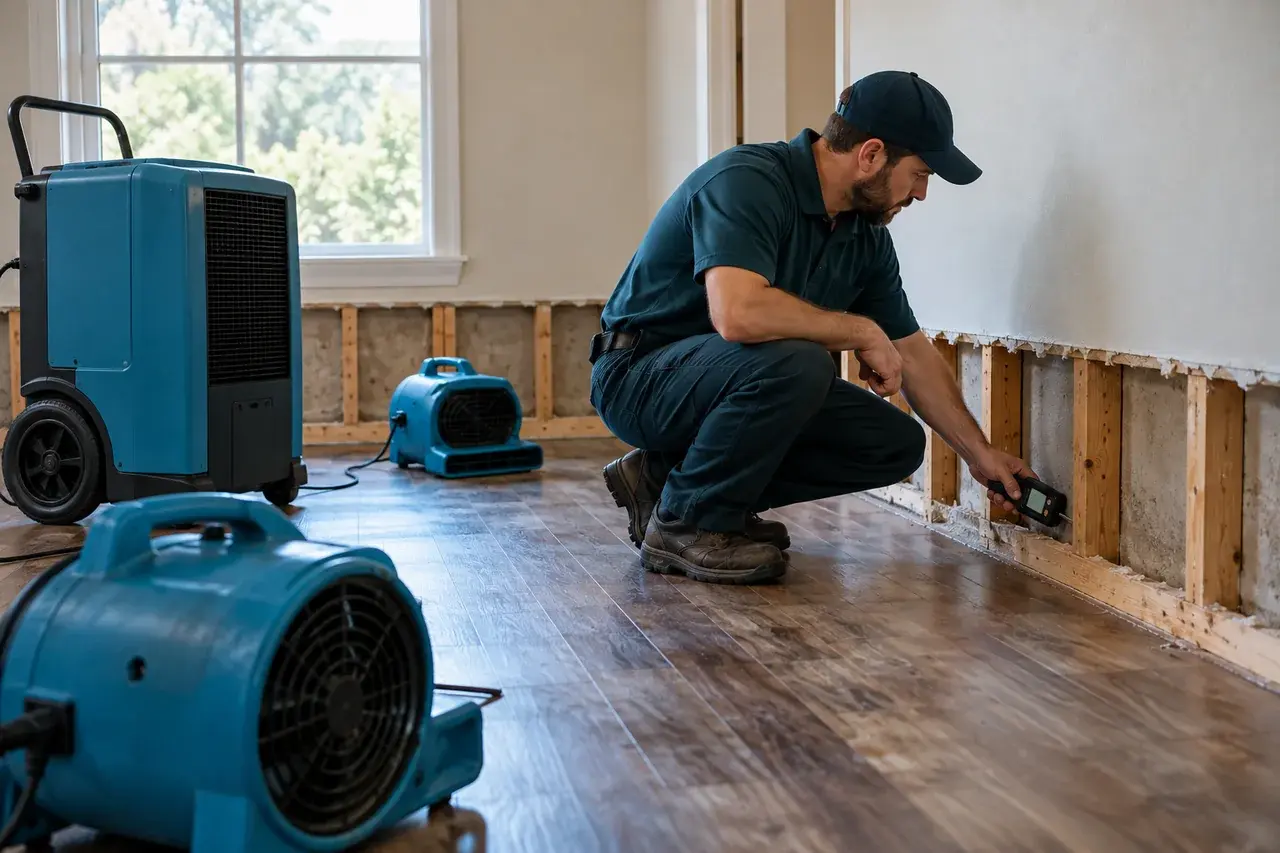
Water mitigation is the set of immediate steps that stop water damage from spreading: confirming the source is stopped, extracting water, removing materials that cannot be saved, and drying the structure with air movers and dehumidifiers. It limits loss; restoration then repairs what was damaged.
- Mitigation limits damage; restoration repairs it
- Most insurance policies expect reasonable steps to prevent further damage
- Drying within 24–48 hours helps prevent mold (U.S. EPA)
- Moisture readings decide when mitigation is complete
Last reviewed · Reviewed against the sources listed on this page
When a pipe bursts or a basement floods in Fairfax, the first hours matter most. Water keeps moving into drywall, subfloors, cabinets and insulation, and every hour it sits increases what has to be removed later. Water mitigation is the work that stops that spread.
Mitigation is not the same as restoration. Mitigation stabilizes the property and dries it; restoration (sometimes called reconstruction) replaces what had to be removed and returns finishes to their pre-loss condition. Most water losses need both, in that order.
01
What Is the Difference Between Water Mitigation and Water Restoration?
Water mitigation stops the damage; water restoration repairs it. Mitigation happens first — extraction, removal of unsalvageable materials and drying. Restoration follows once readings confirm the structure is dry.
| Water mitigation | Water restoration | |
|---|---|---|
| Goal | Stop the damage from spreading | Return the property to pre-loss condition |
| Timing | Immediately, in the first hours and days | After drying is verified |
| Typical work | Extraction, flood cuts, drying, dehumidification, monitoring | Drywall, insulation, flooring, trim, cabinets, paint |
| Ends when | Materials reach their drying goals | Repairs and finishes are complete |
02
What Happens During Water Mitigation?
Water mitigation follows a predictable sequence, although the scope depends on how much water was involved and where it went.
- Source and safety: confirm the leak is stopped, check electrical and contamination hazards, and classify the water as clean, gray or black.
- Moisture mapping: use moisture meters (and often thermal imaging) to find how far water travelled beyond the visible wet area.
- Extraction: remove standing and absorbed water from floors, carpet and pad.
- Controlled removal: take out materials that cannot be dried or were contaminated — often carpet pad, the bottom of drywall and wet insulation.
- Drying setup: place air movers and dehumidifiers, add containment where useful, and record starting readings.
- Monitoring: re-read moisture points on each visit and adjust equipment until materials reach their drying goals.
03
How Quickly Should Water Mitigation Start?
As soon as possible after the water source is stopped. The U.S. EPA advises drying water-damaged areas and items within 24–48 hours to help prevent mold growth. Beyond mold, wood and particleboard begin to swell and finishes start to stain the longer water sits, which increases how much must be removed.
04
Does Insurance Expect Water Mitigation?
Many homeowners policies expect you to take reasonable steps to prevent further damage after a covered loss. Documenting the damage with photos and then starting mitigation is usually the right order. Coverage itself depends on your policy and the cause of the loss — and most homeowners policies do not cover flooding from outside, which requires separate flood insurance (FEMA). Ask your insurer if you are unsure.
We can document mitigation work — photos, moisture readings and drying logs — for your insurance process. We do not determine coverage.
05
What Equipment Is Used for Water Mitigation?
- Extraction units and pumps for standing water
- Air movers to increase evaporation from wet surfaces
- Dehumidifiers to remove evaporated moisture from the air
- Moisture meters and thermal imaging to find and track wet materials
- Containment barriers to focus drying and limit spread
- HEPA air filtration where contamination or dust is a concern
06
Water Mitigation for Fairfax Basements, Townhomes and Businesses
Why do Fairfax basements need so much dehumidification? Below-grade spaces are common across Fairfax County and dry more slowly than upper floors, so basement mitigation usually leans heavily on dehumidification. In townhomes and condos, mitigation may need to cover more than one unit when water crosses shared walls or floors. For offices and retail spaces, mitigation can be phased to keep parts of the business running where it is safe to do so.
Sources & further reading
- A Brief Guide to Mold, Moisture and Your Home — U.S. EPA
- Flood Insurance — FEMA
- Be Flood Ready and Resilient — Fairfax County Stormwater Management
Not sure how serious it is?
A professional assessment shows exactly where the water went and what it will take to dry and restore your property.
Frequently asked questions
Why did the restoration company cut my drywall?
Usually because water or wet insulation was trapped inside the wall, the water was contaminated, or the drywall had swollen or lost strength. A cut a little above the wet line — a flood cut — lets the wall cavity dry and removes damaged material. You can ask to see the moisture readings that support any removal.
Can I stay in my home during water damage drying?
For most clean-water losses, yes. Drying equipment is loud and warm but generally safe to live around. Staying elsewhere makes more sense with sewage or floodwater contamination, electrical hazards, or when your only kitchen or bathroom is out of use.
Is water mitigation the same as water removal?
No. Water removal (or extraction) is one step within mitigation. Mitigation also includes removing unsalvageable materials, drying the structure and monitoring moisture until it is dry.
How long does water mitigation take?
Drying for a typical residential loss often takes several days. Larger losses, dense materials, basements and contaminated water can take longer. Moisture readings — not the calendar — determine when mitigation is complete.
Can I start mitigation before the insurance adjuster arrives?
Usually yes, after you document the damage. Most policies expect reasonable steps to prevent further damage. If you are unsure, check with your insurer — but avoid letting water sit for days.
Will mitigation require removing drywall?
Not always. Drywall affected by clean water and addressed quickly can often be dried in place. Removal is more likely with contaminated water, wet insulation behind the wall, or material that has swollen or lost strength.