Water damage restoration in Fairfax Station, VA focuses on larger homes with deep finished lower levels, wooded lots and, in parts of the area, private wells and septic systems. Typical calls involve basement water after storms, well-equipment leaks and septic-related backups, all followed by extraction, monitored drying and documentation.
Last reviewed · Reviewed against the sources listed on this page
Fairfax Station is a lower-density part of southern Fairfax County, with many single-family homes on larger, wooded lots near areas such as Burke Lake Park and the Occoquan watershed. Many of these homes have large, finished lower levels with walkouts.
Some properties here rely on private wells and septic systems instead of public water and sewer. That changes the kinds of water problems we see — well pressure tanks and pump equipment in basements, and septic-related backups at the lowest drains.
01
Septic backups are handled as sewage
If a septic system backs up into the home, the water is treated as contaminated. A septic professional addresses the system; our team handles cleanup, sanitizing and drying.
02
Large lower levels take longer to dry
Big finished basements with carpet, built-ins and home theaters often require more equipment and careful decisions about what to dry in place versus remove. We walk through those decisions with you before work starts.
03
Common Causes of Water Damage in Fairfax Station
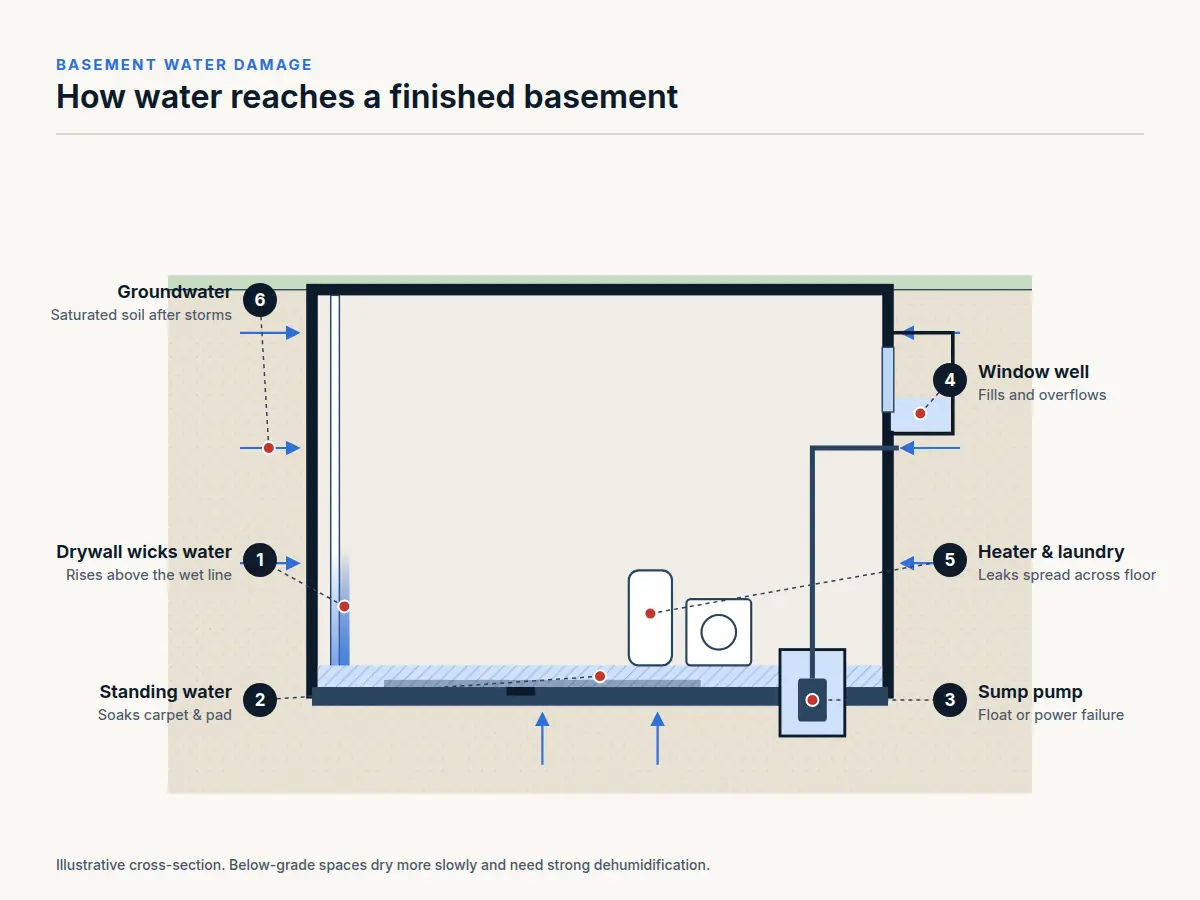
- Storm water entering walkout basements and window wells
- Leaks from well pressure tanks, pumps and water treatment equipment
- Septic-related backups at the lowest drains
- Fallen limbs damaging roofs on heavily wooded lots
- Sump pumps stopping during storm-related power outages
04
Weather and Drainage Considerations
Much of Fairfax Station sits in the Occoquan watershed, where Fairfax County planning keeps development at low density, so homes tend to sit on larger lots with long driveways, slopes and tree cover. Heavy rain moving downhill toward a foundation, gutters filled with leaves and long runs of downspout are common contributors to basement water.
Fairfax County recommends extending downspouts at least five feet from the foundation and keeping outdoor drains clear — simple steps that matter more on sloped, wooded lots.
05
Restoration Considerations for Larger Homes
Large finished basements with carpet, built-ins, home theaters and bars take more equipment and more decisions about what to dry in place versus remove. Where a property relies on a well, a well or plumbing contractor repairs the system while the restoration team handles extraction and drying. Septic backups are cleaned as sewage, with the septic professional addressing the system itself.
Sources & further reading
- Be Flood Ready and Resilient — Fairfax County Stormwater Management
- Solving Drainage and Erosion Problems: A Guide for Homeowners — Fairfax County / Northern Virginia Soil and Water Conservation District
Not sure how serious it is?
A professional assessment shows exactly where the water went and what it will take to dry and restore your property.
Frequently asked questions
Why does my basement flood when the power goes out?
Most sump pumps run on household power. If a storm knocks out power, the pump stops while groundwater keeps rising. A battery or water-powered backup pump and a high-water alarm reduce that risk.
Is a septic backup handled differently from a pipe leak?
Yes. A septic backup is contaminated water, so porous materials it touched are removed and surfaces are cleaned and sanitized before drying. A septic professional addresses the system.
Do you handle well equipment leaks?
We handle the water damage. A well or plumbing contractor should repair the pressure tank, pump or lines.