A flooded basement should be made electrically safe first; then the water source is identified, standing water extracted, wet carpet pad and lower drywall evaluated, and the space dried with strong dehumidification. Below-grade spaces dry slowly, and water from outside or a floor drain is treated as contaminated.
- Never wade in water near live electrical
- Outside water is treated as contaminated
- Dehumidification is key below grade
- Extend downspouts at least 5 ft (Fairfax County)
Last reviewed · Reviewed against the sources listed on this page
Many Fairfax County homes have basements, and many of those basements are finished with carpet, drywall and storage. When water gets in, it reaches materials that soak it up quickly — and because basements are below grade, they dry more slowly than upper floors.
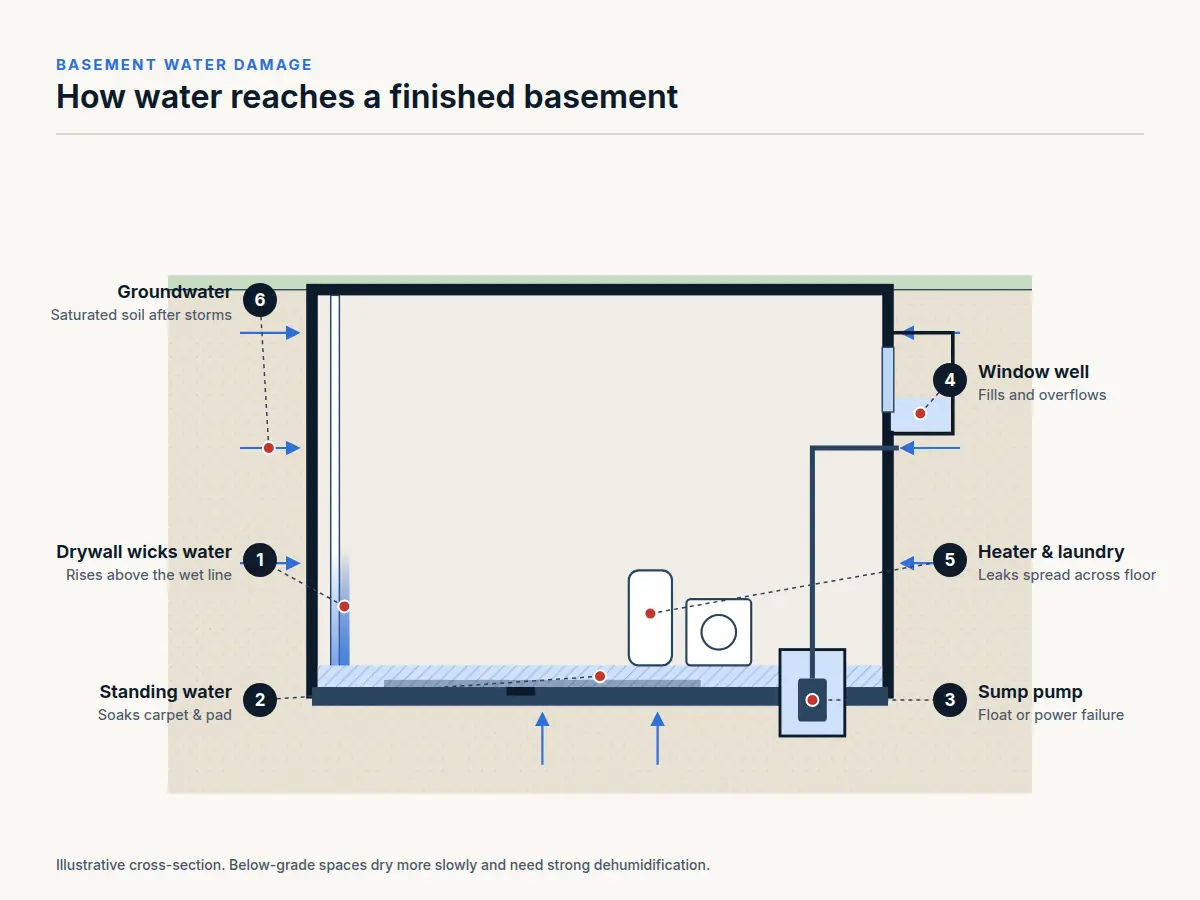
Basement water usually comes from one of a few sources: heavy rain and poor drainage, a failed sump pump, a water heater or laundry leak, a foundation crack, a window well, or a floor-drain or sewer backup. The source determines how the water is classified and cleaned.
01
Common causes in Fairfax-area basements
- Heavy or prolonged rain saturating soil around the foundation
- Sump pump failure, often during a power outage
- Window wells filling and overflowing
- Gutters and downspouts discharging near the foundation
- Water heater, washing machine or utility sink leaks
- Floor drain or sewer line backups
02
How basement water damage is restored
After the water is extracted, the team decides what can be dried in place and what must be removed. Carpet pad, the bottom of drywall and insulation in finished basement walls are frequent concerns. Drying a basement usually requires strong dehumidification because below-grade spaces tend to stay humid.
03
After it's dry: reduce the chance of a repeat
- Have a plumber or waterproofing contractor address the source
- Consider a battery backup or water-powered backup sump pump
- Extend downspouts away from the foundation
- Keep window well covers and drains clear
- Run a dehumidifier during humid months
Example scenario: finished basement after sump pump failure
An illustrative example of a typical Fairfax-area water loss — not a specific customer project.
What happened
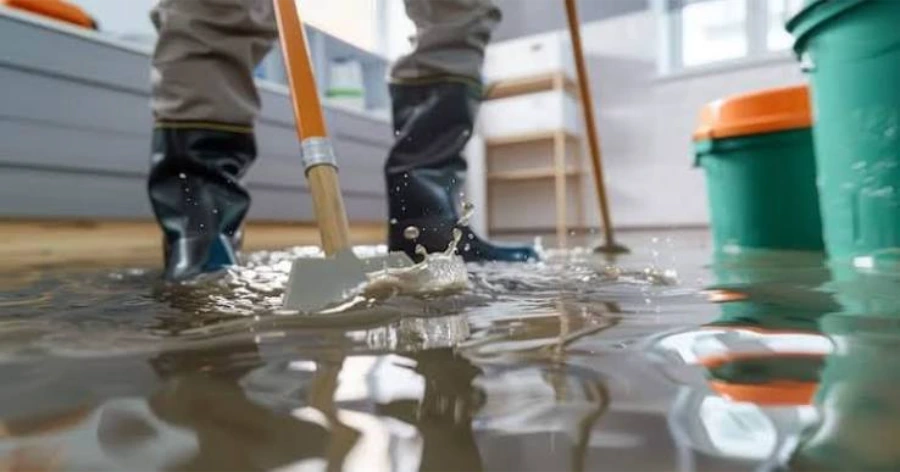
During heavy rain, the power went out and the sump pump stopped. Groundwater rose through the pit and spread across carpet, the laundry area and into a bedroom. Because the water came from outside the home, it was handled with more caution than a clean supply-line leak.
How it is typically restored
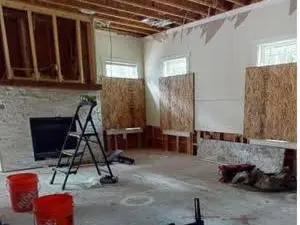
- Safety check of the basement electrical circuits before entry
- Water extraction from carpet and hard surfaces
- Carpet pad and tack strip removed in affected areas
- Flood cut along affected finished walls where moisture and wet insulation were found
- Cleaning and antimicrobial treatment of affected surfaces
- Air movers and dehumidifiers placed from the moisture map; storage room contained
- Moisture points re-read on each visit until they matched dry reference areas
Outcome
Readings reached their drying goals, after which drywall, insulation, pad and carpet were replaced. The homeowner was advised to talk to a plumber about a battery backup pump and high-water alarm.
Sources & further reading
- Be Flood Ready and Resilient — Fairfax County Stormwater Management
- Solving Drainage and Erosion Problems: A Guide for Homeowners — Fairfax County / Northern Virginia Soil and Water Conservation District
- Flood Insurance — FEMA
Not sure how serious it is?
A professional assessment shows exactly where the water went and what it will take to dry and restore your property.
Frequently asked questions
How long does it take to dry a basement?
It varies with how much water was involved, how long it sat, the materials affected and the humidity. Many basement drying jobs take several days. Moisture readings determine when drying is complete.
Can finished basement drywall be saved?
Sometimes. If the water was clean and addressed quickly, drywall can often be dried. If water was contaminated, sat for a long time, or wet insulation is behind the wall, the lower portion is usually removed.