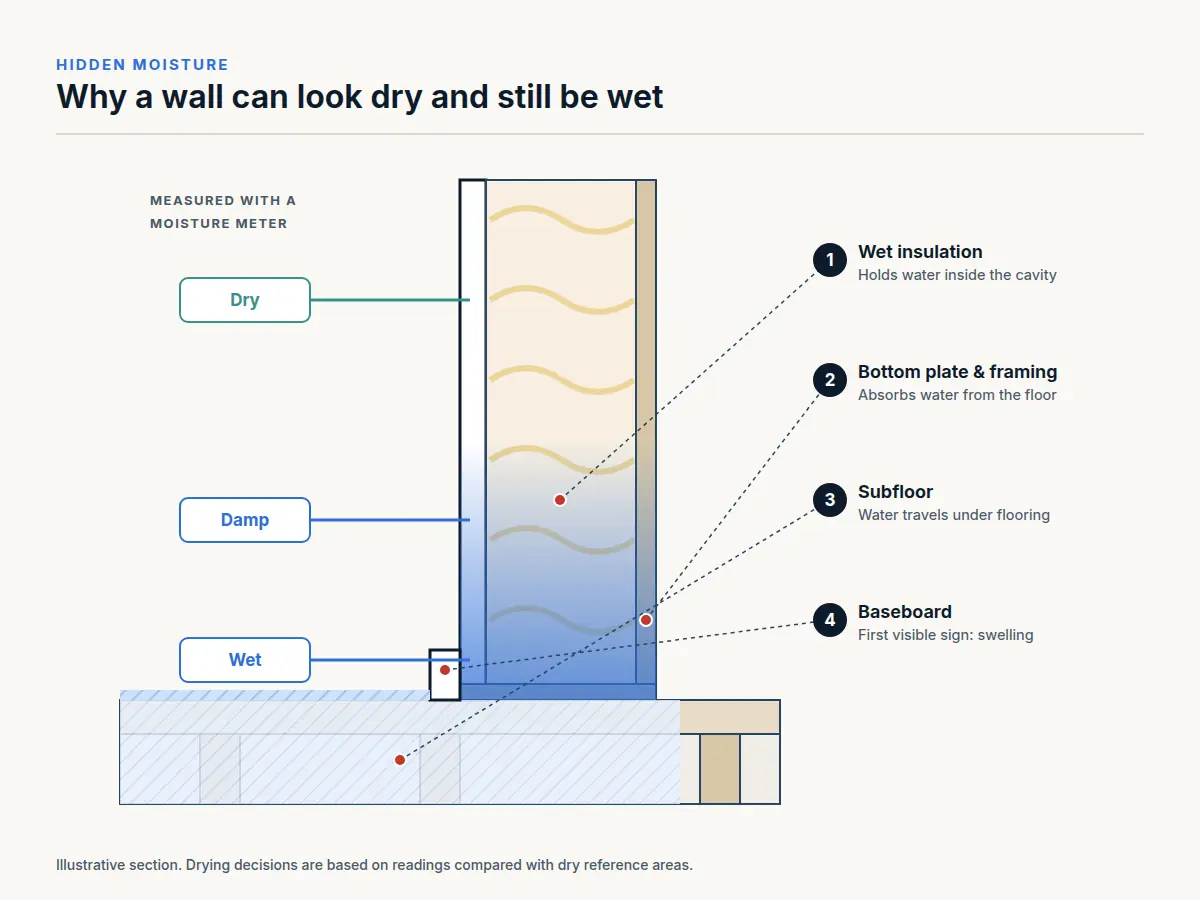
Hidden water damage is moisture trapped inside walls, under floors or above ceilings, usually from slow leaks. Signs include musty odors, warped flooring, bubbling paint and swollen baseboards. A moisture inspection with meters and thermal imaging finds it without unnecessary demolition.
- Odor and swelling are early signs
- Thermal images are confirmed with meters
- Slow leaks can run for months
- Find the source before drying
Last reviewed · Reviewed against the sources listed on this page
Small, slow leaks from supply lines, drains, shower pans, window flashing or HVAC condensate can go on for months. Because the water is hidden, the first sign is often an odor, warped flooring, bubbling paint or a stain that slowly grows.
A moisture inspection uses moisture meters, and often thermal imaging, to trace where water is — and where it is not — without unnecessary demolition.
01
Common hidden-leak locations
- Behind and below showers and tubs
- Under kitchen and bathroom sinks
- Behind refrigerators with ice makers
- Around windows and exterior doors
- HVAC air handlers and condensate lines
- Slab or under-floor plumbing
02
What a moisture inspection tells you
The inspection maps elevated moisture compared with dry reference areas, helps narrow down the source and shows how far water has spread. That information guides whether you need a plumber, a roofer, drying, remediation or simply monitoring.
Sources & further reading
Not sure how serious it is?
A professional assessment shows exactly where the water went and what it will take to dry and restore your property.
Frequently asked questions
Can thermal cameras see through walls?
No. Thermal imaging shows surface temperature differences that can suggest moisture. Findings are confirmed with moisture meters before conclusions are drawn.