Storm damage restoration repairs water intrusion caused by severe weather — wind-driven rain, roof and window leaks, fallen limbs and storm runoff. The priorities are safety, temporary protection to stop more water getting in, water extraction, drying of attics, ceilings and walls, and documentation for insurance.
- Protect the building before drying it
- Tree removal is a separate trade
- Document damage before cleanup
- Storm floodwater may need flood insurance (FEMA)
Last reviewed · Reviewed against the sources listed on this page
Northern Virginia sees strong summer thunderstorms, occasional remnants of tropical systems and winter storms with snow and ice. In wooded parts of Fairfax County, mature trees add to the risk: a falling limb can puncture a roof and let rain pour into attics and ceilings.
Storm water intrusion often affects several areas at once — attic insulation, ceiling drywall, walls and floors below — so it needs a coordinated plan for protection, extraction and drying.
01
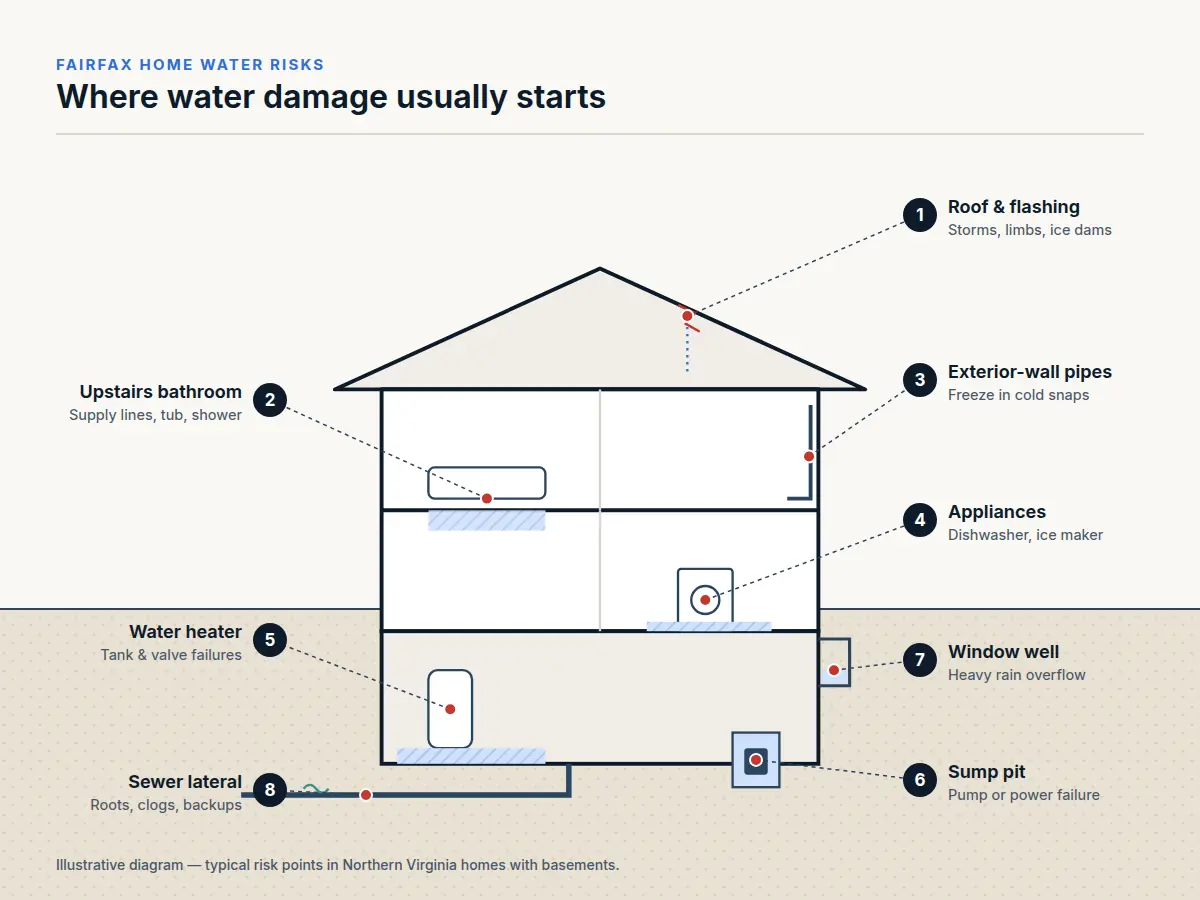
Common storm-related water damage
- Roof damage from wind or fallen limbs
- Wind-driven rain through windows, doors and siding
- Ice dams causing water to back up under shingles
- Overflowing gutters directing water against foundations
- Basement flooding during heavy rain
02
Protect the property first
Should you wait for the adjuster before covering a damaged roof? If the building is open to the weather, more rain means more damage. Temporary protection — tarps or board-up — is often the first step. Note: if a tree is involved or the structure looks unsafe, stay out and contact the appropriate tree or structural professional and your utility if lines are down.
03
Documentation matters after storms
Storms often affect many properties at once, and insurers may take longer to schedule inspections. Clear photos, moisture readings and a record of mitigation work help show what happened and what was done to limit further damage.
04
What Weather Causes Water Damage in Northern Virginia?
Fairfax-area properties see strong summer thunderstorms with heavy rain and wind, occasional remnants of tropical systems, and winter snow and ice that can create ice dams and freeze pipes. Each brings its own pattern: roof and window leaks and basement flooding in warm months, burst pipes and ice-dam leaks in winter.
05
What Should You Do After Storm Damage?
- Stay clear of downed lines and report them to the utility
- Keep out of rooms with sagging ceilings
- Photograph damage outside and inside
- Arrange temporary roof or window protection
- Start extraction and drying once the building is protected
Sources & further reading
- Flood Insurance — FEMA
- Be Flood Ready and Resilient — Fairfax County Stormwater Management
Not sure how serious it is?
A professional assessment shows exactly where the water went and what it will take to dry and restore your property.
Frequently asked questions
Should I wait for my adjuster before starting cleanup?
Most policies expect you to take reasonable steps to prevent further damage. Document the damage first, then mitigate. Check with your insurer about their specific requirements.
Do you remove fallen trees?
Tree removal should be done by a qualified tree service. We focus on protecting the building from water, extraction, drying and restoration once the tree is safely removed.
Can roof leaks damage insulation?
Yes. Wet insulation loses effectiveness and can hold moisture against ceiling drywall and framing. Saturated insulation is often removed and replaced after the area is dried.