Commercial water damage restoration is the extraction, drying, cleaning and repair of water-damaged business properties — offices, retail stores, restaurants, medical suites and multifamily buildings. It follows the same drying principles as residential work, but adds phasing to limit downtime, coordination with property managers and tenants, and documentation for landlords and insurers.
- Safety and containment first
- Work can be phased to limit downtime
- One documented record helps owners, tenants and insurers
- Sprinkler and roof-drain leaks are common commercial sources
Last reviewed · Reviewed against the sources listed on this page
Fairfax-area businesses sit in office parks along Route 50, I-66 and Route 28, in shopping centers and mixed-use buildings, and in multifamily properties managed for owners. When water gets in, decisions involve more people — owners, tenants, property managers, insurers — and every hour of closure has a cost.
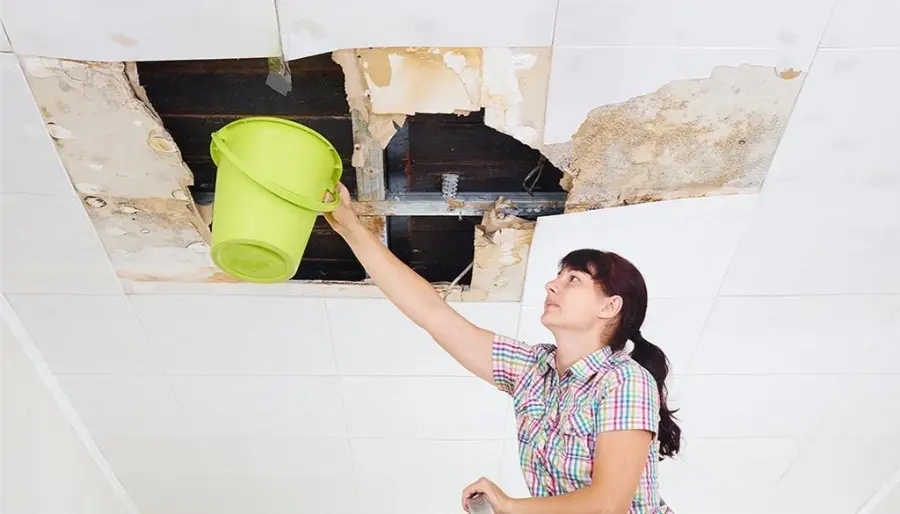
Is a commercial job really different from a house? Commercial water damage restoration applies measured drying to larger, more complex spaces: suspended ceilings, commercial carpet tile, raised floors, shared mechanical systems and multiple tenant spaces.
01
How Is Downtime Reduced During Commercial Water Restoration?
Affected areas are contained so unaffected areas can stay in use when it is safe. Drying can be scheduled around business hours, with equipment placed to avoid customer areas where possible. Priorities are set with the owner or manager: life-safety systems, critical equipment and records, revenue-generating spaces, then everything else.
02
Who Needs to Be Involved?
- Property owner or landlord
- Property or facility manager
- Affected tenants
- Insurance carriers for the building and for tenants
- Trades such as plumbers, roofers or fire-protection contractors
A single moisture map and drying record shared with everyone reduces disputes about where water travelled and what was done.
03
Commercial vs Residential Water Damage
| Residential | Commercial | |
|---|---|---|
| Decision makers | Homeowner, insurer | Owner, manager, tenants, insurers |
| Scheduling | Around the household | Around business hours and access rules |
| Materials | Drywall, carpet, hardwood | Also ceiling tile, carpet tile, raised floors |
| Documentation | For homeowner and insurer | For multiple parties and leases |
Sources & further reading
Not sure how serious it is?
A professional assessment shows exactly where the water went and what it will take to dry and restore your property.
Frequently asked questions
Can my business stay open during drying?
Often in part. Affected areas can be contained while others stay open, provided it is safe and the water was not heavily contaminated.
Do you work with property managers?
Yes. Access, scheduling and communication can be coordinated through the property or facility manager, with documentation shared with the parties who need it.