Flood damage restoration is the cleanup and drying of a property after water enters from outside — heavy rain, surface runoff, rising groundwater or overflowing drains. Because floodwater can carry soil, bacteria and chemicals, it is treated as contaminated: affected porous materials are usually removed, surfaces cleaned and the structure dried.
- Floodwater from outside is treated as black water
- Most homeowners policies do not cover flooding (FEMA)
- Fairfax County offers a cost-share flood mitigation program
- Photograph the damage before cleanup
Last reviewed · Reviewed against the sources listed on this page
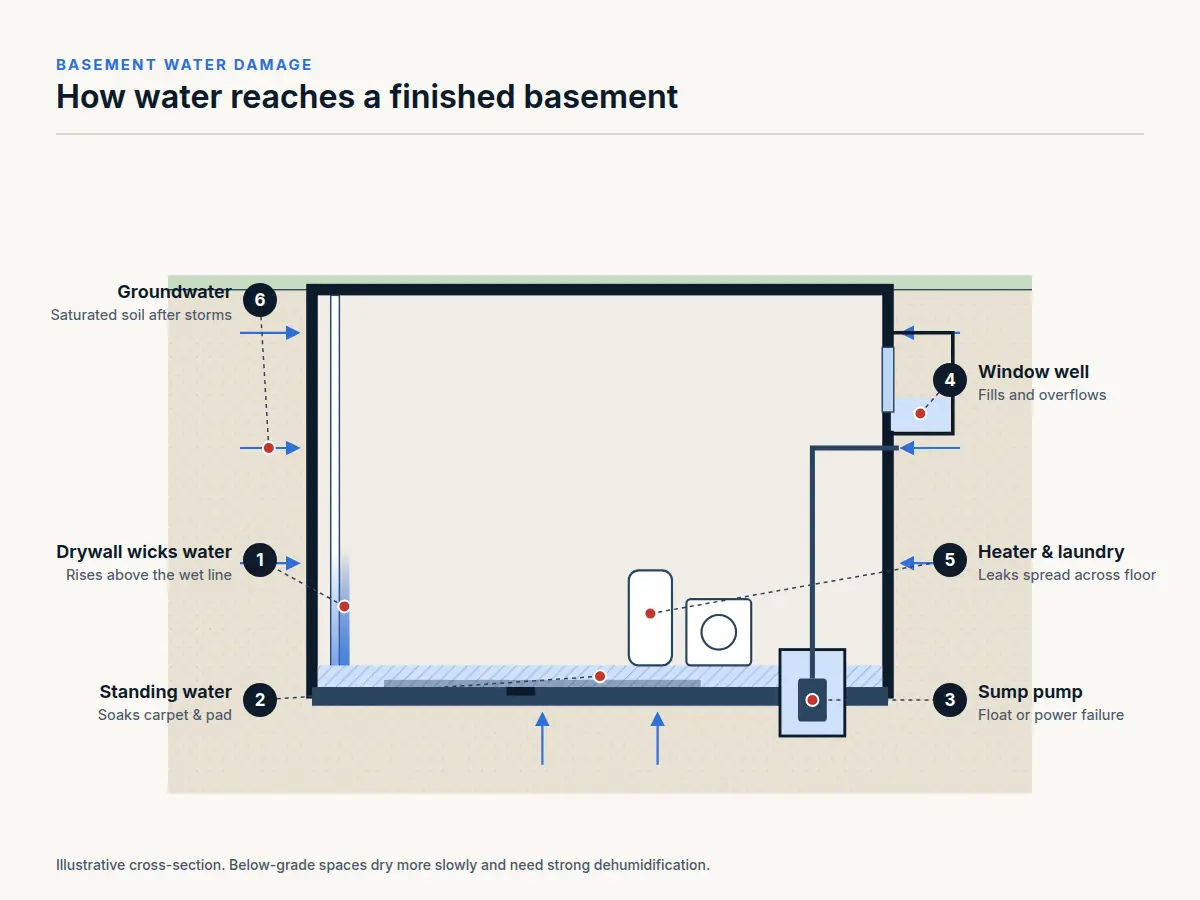
In Fairfax and across Northern Virginia, flooding inside a property usually comes from heavy rain overwhelming grading and drainage, water entering through basement walls or window wells, overwhelmed sump pumps, or nearby creeks and storm drains backing up during intense storms.
Because water that crosses the ground can carry bacteria, soil and chemicals, flood restoration involves more removal and cleaning than a clean-water leak. Porous materials that soaked up floodwater are often removed rather than dried in place.
01
Why floodwater is handled differently
Why can’t floodwater be cleaned up like a pipe leak? The restoration industry classifies water by contamination level. Clean water from a supply line is treated very differently from water that came in from outside or from a sewer. Surface floodwater is generally treated as contaminated, which affects what can be saved, what personal protective equipment is used and how surfaces are cleaned.
02
Common flood scenarios in Fairfax-area properties
- Basement flooding during heavy or prolonged rain
- Water entering through window wells or exterior basement doors
- Sump pump failure during a power outage or storm
- Runoff from poor grading or clogged gutters and downspouts
- Storm drain or creek overflow in low-lying areas
03
Flood insurance is often separate
Will a homeowners policy pay for a flooded basement? Many standard homeowners policies treat flooding from surface water differently from sudden plumbing leaks, and flood coverage is frequently a separate policy. We do not determine coverage, but we document the damage thoroughly so you and your adjuster have what you need.
Read more in our guide to water damage and insurance.
04
What Should You Do After a Flood in Your Fairfax Home?
- Stay out of flooded areas until power to them is safely off
- Keep children and pets away from floodwater
- Photograph and video the damage before anything is moved
- Contact your insurer — and your flood insurer if you have a separate policy
- Call for water extraction and drying as soon as it is safe
05
How Does Heavy Rain Affect Fairfax Properties?
Heavy rain can saturate soil around foundations, overwhelm gutters and storm drains, and fill basement window wells. Fairfax County recommends cleaning gutters and outdoor drains, extending downspouts at least five feet from the foundation and covering window wells to reduce the risk of basement flooding.
Fairfax County also funds a Flood Mitigation Assistance Program, administered by the Northern Virginia Soil and Water Conservation District, that can partially reimburse qualifying flood-protection projects on a cost-share basis.
06
Is Flood Damage Different From Water Damage?
Yes — for cleanup and often for insurance. The source of the water decides both how it is cleaned and which policy may respond.
| Source | Typical water category | Insurance note (check your policy) |
|---|---|---|
| Burst supply pipe | Clean at first | Often handled as sudden and accidental under a homeowners policy |
| Surface flooding or rising water | Black (contaminated) | Usually requires separate flood insurance |
| Sump pump failure or drain backup | Gray to black | Often requires a water backup endorsement |
Sources & further reading
- Flood Insurance — FEMA
- National Flood Insurance Program (FloodSmart) — FEMA
- Be Flood Ready and Resilient — Fairfax County Stormwater Management
- Solving Drainage and Erosion Problems: A Guide for Homeowners — Fairfax County / Northern Virginia Soil and Water Conservation District
Not sure how serious it is?
A professional assessment shows exactly where the water went and what it will take to dry and restore your property.
Frequently asked questions
Does Fairfax County help homeowners prevent flooding?
Fairfax County publishes flood-readiness guidance and funds a Flood Mitigation Assistance Program, administered by the Northern Virginia Soil and Water Conservation District, that can partially reimburse qualifying flood-protection projects. Check the county's stormwater pages for current eligibility.
Is it safe to stay in a flooded home?
It depends on the extent of flooding, whether electrical systems were affected and whether the water was contaminated. Avoid flooded areas until power to them is safely shut off, and keep children and pets away from floodwater.
Can flooded drywall be saved?
Drywall affected by contaminated floodwater is typically removed above the water line rather than dried in place. Our team will show you where moisture and contamination reached before recommending removal.
Do you handle commercial flooding?
Yes. Offices, retail spaces and multi-unit properties can be assessed and scoped, with work phased to reduce disruption where possible.