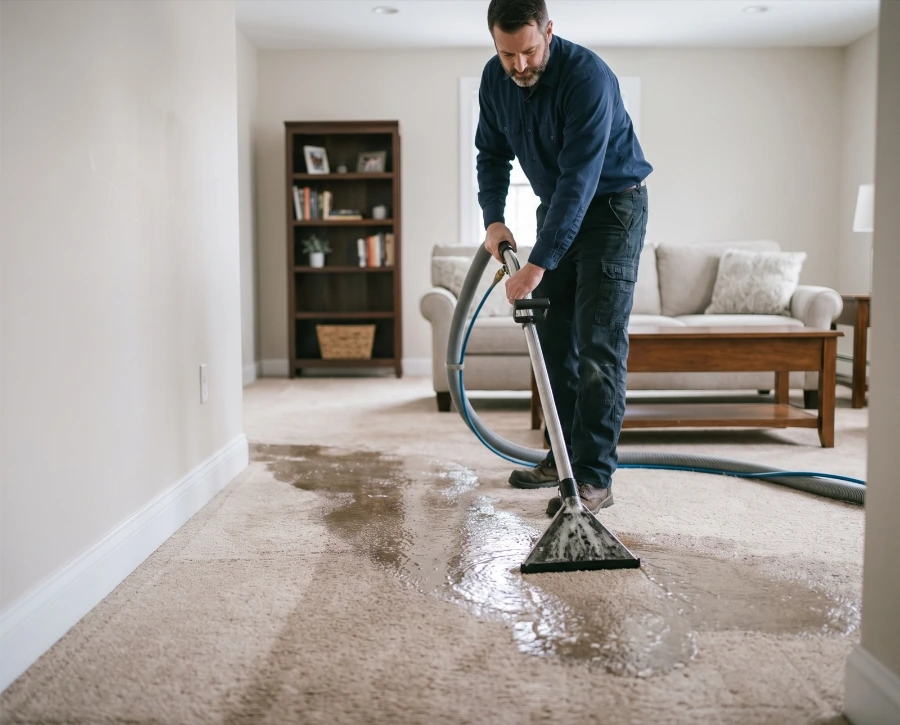
Wet carpet can often be saved if the water was clean and extraction and drying start quickly; the pad is more often replaced because it holds water and is inexpensive. Carpet soaked by sewage or floodwater from outside is removed for safety. Drying in place uses extraction, then air flow under and over the carpet with dehumidification.
- Water category decides first
- Pad is usually replaced, carpet often saved
- Delaminated carpet cannot be restored
- Odor means moisture is still present
Last reviewed · Reviewed against the sources listed on this page
Wall-to-wall carpet is common in Fairfax bedrooms and finished basements. When a pipe, appliance or water heater leaks, carpet and pad act like a sponge, spreading water to tack strip, baseboards and the bottom of drywall.
Should you pull up wet carpet right away? The right approach depends on the water source, how long it sat and whether the carpet backing has separated.
01
When Should Wet Carpet Be Replaced?
| Situation | Carpet | Pad |
|---|---|---|
| Clean water, caught quickly | Often dried in place | Often replaced |
| Gray water (washer, dishwasher) | Evaluated; cleaned if kept | Replaced |
| Sewage or outside floodwater | Removed | Removed |
| Backing delaminated | Replaced | Replaced |
02
How Is Wet Carpet Dried in Place?
- Thorough extraction, often with weighted extraction tools
- Lifting the carpet to remove wet pad when needed
- Air movers directing air under and over the carpet
- Dehumidifiers to remove the evaporated moisture
- Checking walls, baseboards and tack strip around the edges
Not sure how serious it is?
A professional assessment shows exactly where the water went and what it will take to dry and restore your property.
Frequently asked questions
Why does my carpet smell after it dried?
A lingering musty odor usually means moisture remains in the pad, subfloor or wall base, or that the water was contaminated. Moisture readings show where it is.