Mold remediation after water damage removes mold-affected materials and fixes the moisture that allowed mold to grow. It includes inspection, containment, removal of affected porous materials, cleaning, drying and verification. The U.S. EPA notes that the key to mold control is moisture control and advises drying wet materials within 24–48 hours.
- Fix the moisture source first
- Porous moldy materials often need removal
- Fast drying is the best mold prevention
- Health questions belong with a doctor
Last reviewed · Reviewed against the sources listed on this page
Mold spores are naturally present in indoor and outdoor air. They become a problem when they land on a material that stays damp — wet drywall, a soaked subfloor, a leaking window frame, or a humid basement. That is why mold often follows water damage that was not found or dried quickly enough.
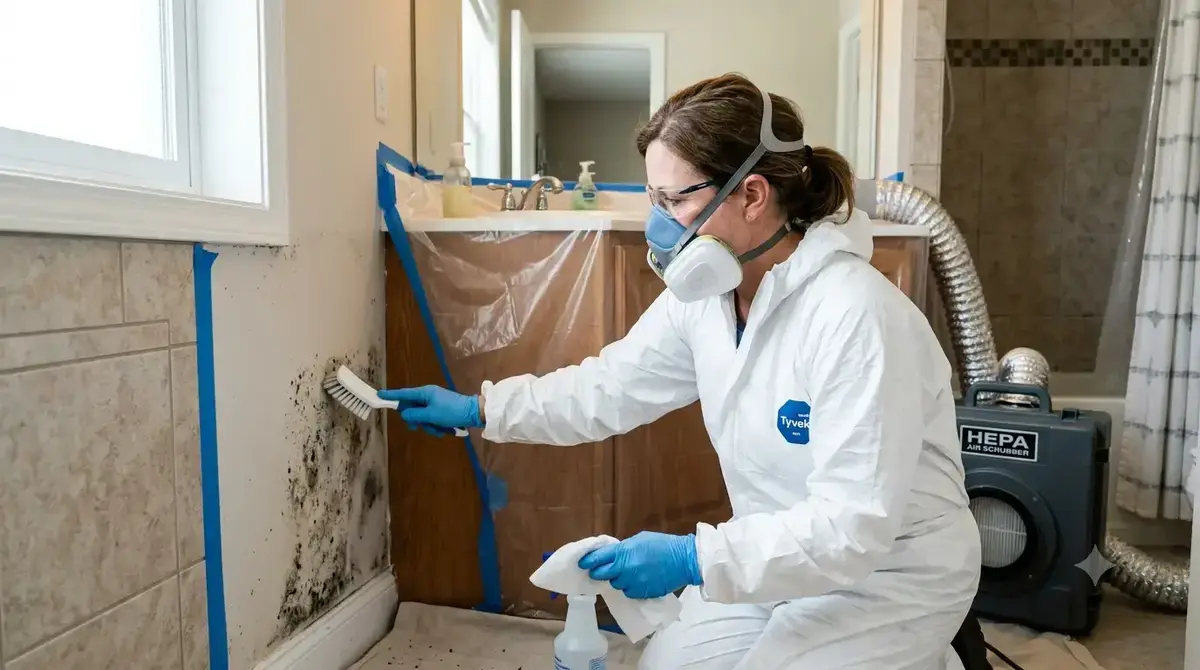
Our approach is straightforward: find and stop the moisture source, contain the affected area, remove or clean affected materials, dry the structure and verify the area is dry before rebuilding.
01
Moisture control comes first
Will killing the mold fix the problem? Removing mold without fixing the moisture source is a temporary fix. Whether the cause is a slow plumbing leak, a roof or window leak, groundwater in a basement or high indoor humidity, it needs to be addressed for remediation to last.
02
How remediation typically works
- Inspection and moisture assessment to define the affected area
- Containment and, where appropriate, negative air pressure to limit spread
- Removal of mold-affected porous materials such as drywall and insulation
- Cleaning of salvageable surfaces and HEPA vacuuming
- Drying and moisture verification
- Rebuild once the area is confirmed dry
03
A note on health questions
We are restoration professionals, not medical providers. If you have health concerns related to mold or indoor air, please talk to your doctor. For independent testing, some homeowners choose to hire a separate indoor environmental professional.
04
How Can You Prevent Mold After Water Damage?
- Dry wet materials within 24–48 hours (U.S. EPA)
- Run dehumidification, especially in basements
- Check inside walls, under flooring and above ceilings — not just surfaces
- Fix the leak or drainage problem that caused the water
- Remove porous materials that stayed wet too long
05
Mold Prevention vs Mold Remediation
| Mold prevention | Mold remediation | |
|---|---|---|
| When | Materials are wet but no growth yet | Mold growth is already present |
| Main work | Extraction, drying, dehumidification | Containment, removal, cleaning, drying, verification |
| Goal | Dry before mold can grow | Remove growth and stop it returning |
Sources & further reading
Not sure how serious it is?
A professional assessment shows exactly where the water went and what it will take to dry and restore your property.
Frequently asked questions
Can mold grow behind walls after a leak?
Yes. Wet insulation, drywall and framing inside a wall cavity can stay damp long after the surface looks dry. Moisture readings and, where needed, opening the wall show whether that has happened.
Can I just bleach the mold?
Surface cleaning may remove visible staining on non-porous surfaces, but it does not address mold growing inside porous materials like drywall or the moisture problem behind it. Larger areas or growth inside walls should be assessed professionally.
How quickly can mold grow after water damage?
Mold can begin to grow on damp materials within a few days under the right conditions. That is why prompt drying after a water event is one of the most effective forms of mold prevention.
Do you test for mold?
Our focus is identifying moisture and visible growth, then remediating. If you want independent air or surface sampling, we can work alongside an indoor environmental professional of your choosing.